How to Choose an OEM Resistance Band Supplier for US E‑commerce
If you have any product customization needs or ideas, MOQ 500, contact us.
May. 29, 2026
Choosing the right factory for private-label resistance bands has a direct impact on reviews, returns, margins, replenishment speed, and long-term brand credibility across Amazon, Shopify, and other US e-commerce channels. A supplier that consistently delivers the correct material, reliable tensile performance, FBA-ready packaging, and verifiable compliance helps reduce listing issues, avoid repack or rework fees, and protect the seller metrics that influence Buy Box performance and organic ranking.
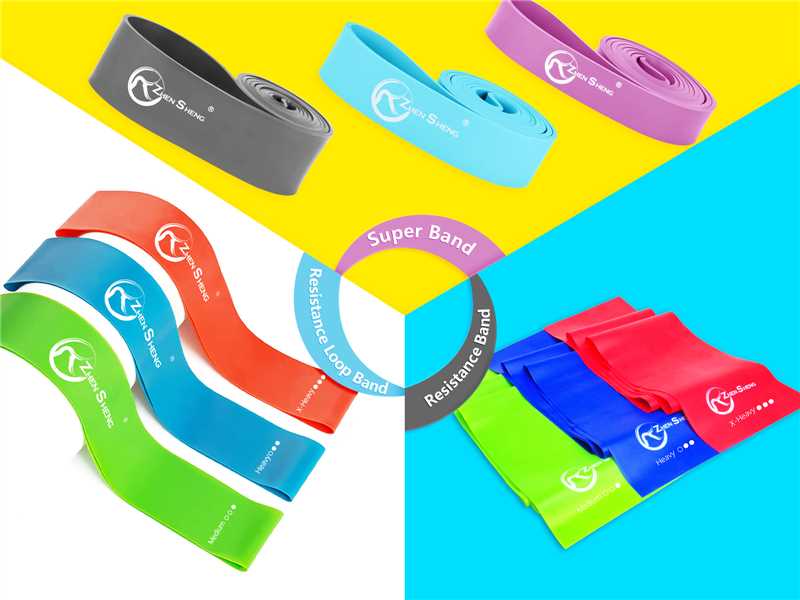
Material selection affects the customer experience more than almost any other variable. It influences feel, durability, odor, skin sensitivity, and the likelihood of returns. For most buyers, the main material categories are natural latex, TPE, and fabric-covered loop bands.
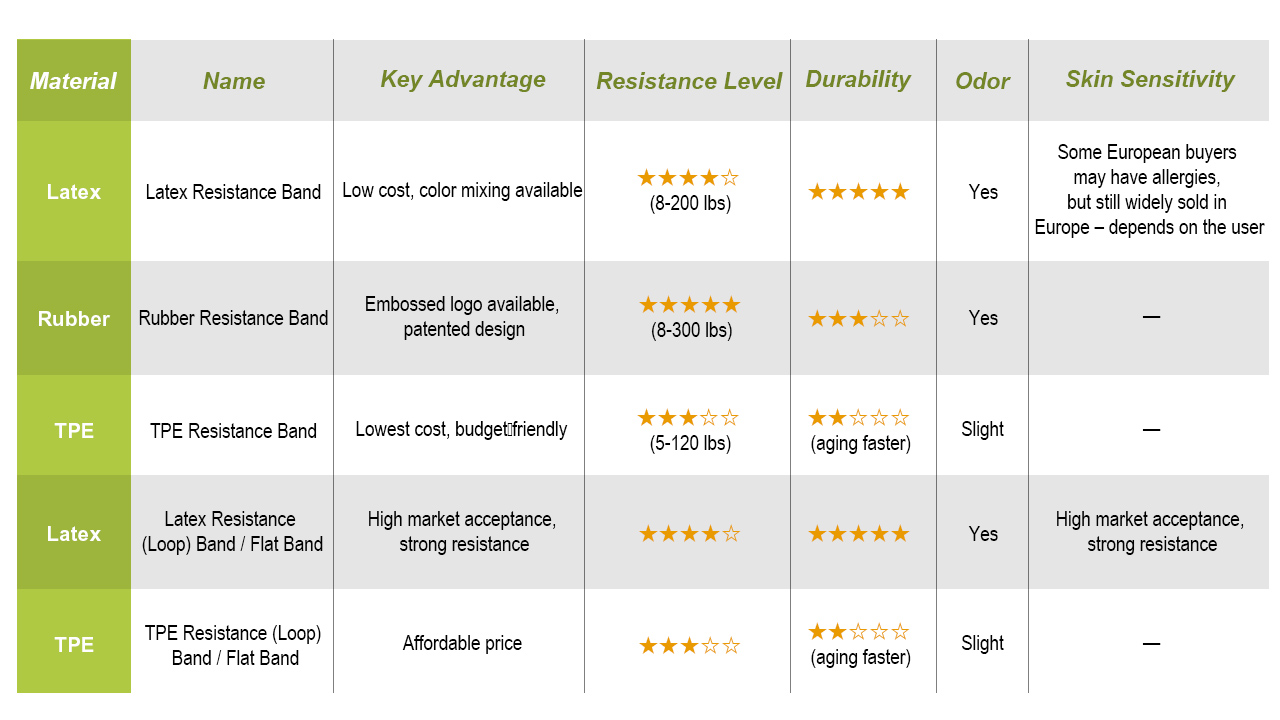
Natural latex offers high elasticity and the classic "snap-back" feel many users prefer for strength training, assisted pull-ups, and variable-tension exercises. It is widely used in thick loop bands and long super bands. However, latex can produce a noticeable rubber odor when first opened and may trigger allergic reactions in some users. If you are sourcing latex bands, ask for tensile and elongation data, along with proof of batch-to-batch consistency.
TPE is often chosen for its lower odor and more consistent color and surface finish. It is commonly used in loop bands, tube bands, and molded accessories. TPE can be a good fit for travel sets and general fitness products, but its heat and UV aging performance differs from natural rubber. That makes real-world durability testing especially important if your products will be sold in warm climates or stored for long periods.
Fabric-covered resistance bands are popular for lower-body workouts because they are non-slip, more comfortable against the skin, and less likely to roll during use. They also tend to photograph well and feel more "retail ready," which makes them attractive for DTC bundles and social-media-driven brands. They are especially common in glute and hip band sets.
The key is to match the material to the promise of the product. Heavier-duty training sets usually perform best with layered latex or latex-plus-fabric designs, while odor-sensitive, beginner, and travel-focused products may be better suited to TPE or woven fabric loops.
A good supplier should be able to support every technical claim with documentation. Marketing language is not enough. Before placing an order, request evidence in the following areas.
Ask for raw test reports showing tensile strength and elongation at break for the exact material or production batch you are buying. To keep results comparable, request testing based on ASTM D412 or ISO 37. That avoids vague or non-standard reports that cannot be verified.
A reliable supplier should provide:
a pre-production sample
a final confirmation sample before mass production
a documented signoff form covering color, logo placement, thickness, dimensions, and resistance level
This step is essential for avoiding disputes later.
Ask how the factory handles quality control during production, not just at the end. Useful questions include:
How many units are inspected per batch or carton?
What failure modes are tracked?
Will the supplier share photos, measurement logs, or inspection reports before shipment?
For products sold in the US and internationally, chemical and social compliance matter. Ask for:
REACH-related chemical documentation or restricted-substance test reports where applicable
factory audit summaries such as BSCI or equivalent social compliance evidence
Do not rely on generic statements like "compliant with international standards." Ask to see the actual reports.
Many sourcing discussions break down over minimum order quantities, customization limits, and packaging expectations. A supplier may look competitive on unit price but fall short on startup-friendly MOQs or FBA preparation.
The table below covers the questions that matter most during supplier evaluation.
| Topic | What to ask | Typical buyer expectation | Example: ZhenSheng published capability |
|---|---|---|---|
| Sample orders | Can you supply a pre-production sample and production sample? Who pays freight? | Sample lead time of 7–14 days, with clear cost responsibilities | ZhenSheng lists sample availability. |
| Production MOQ | What is the MOQ for custom colors, logos, or bundled sets? | Clear MOQ tiers, with lower entry points preferred for new brands | ZhenSheng lists MOQ 500 for a Super Band model with customization. |
| Lead time | What is the standard production lead time after sample approval? | Roughly 3–6 weeks for many elastomer products | ZhenSheng lists a 25–35 day delivery window and supply ability of 5,000 pieces per day for its Super Band listing. |
| Custom printing | Can you print logos, emboss, or support color customization? What proofing process is required? | Digital proof plus physical confirmation before production | ZhenSheng states logo, color customization, embossing, and packaging design services. |
| Packaging options | Can you provide retail boxes, polybags, inserts, barcode labeling, and FBA-ready prep? | Supplier should support FBA-ready or retail-ready packaging formats | Request confirmation that packaging will meet current Amazon prep and barcode requirements. |
| Carton and pallet standards | What are the carton specs, weight limits, and pallet options? | Cartons sized to carrier and fulfillment-center requirements | Ask for carton photos and a standard packing list before the first shipment. |
If you sell through Amazon FBA, ask the supplier to prepare a sample exactly as it will arrive at the fulfillment center. This should include:
barcode placement
polybag warning text if required
final retail box or polybag format
carton labeling and packing method
Many sellers run into avoidable fees because packaging was approved visually but not operationally. A product can look fine and still fail at the fulfillment center due to missing warnings, unreadable labels, or improper prep. For DTC brands, the same principle applies: request a fully packed sample that reflects the actual unboxing experience.
A structured scorecard makes supplier comparisons easier and less subjective. During the RFQ process, score each supplier from 0 to 5 in each category, then multiply by the weight.
Quality consistency (25): tensile reports, sample signoff process, in-line QC, and batch controls
Compliance and audits (20): chemical testing, REACH-related documentation, and social audit records
Customization and packaging (18): logo application, embossing, packaging formats, insert support, and FBA/DTC readiness
MOQ flexibility (12): willingness to support smaller starter runs for new product launches
Lead time and supply capacity (15): realistic timelines, replenishment capability, and production capacity
Price competitiveness and landed cost (10): unit cost after freight, duties, prep fees, and marketplace fees
This framework helps prevent overemphasis on headline unit price. A slightly more expensive supplier may be the better choice if quality is more stable, packaging is correct, and replenishment is more predictable.
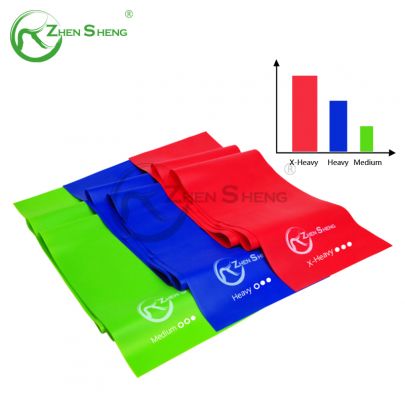
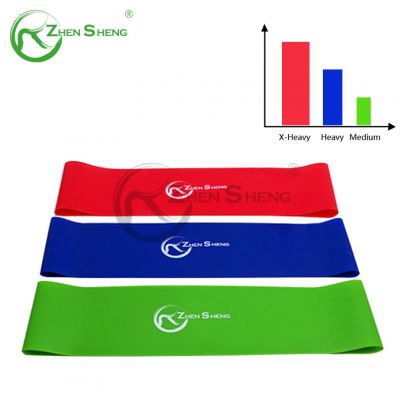
Using only publicly stated capabilities, ZhenSheng lists OEM/ODM support, logo and color customization, sample availability, MOQ 500 for a Super Band product, packaging options including polybag and color box, supply ability of 5,000 pieces per day, and a delivery timeline of 25–35 days. Those points align most directly with the customization, MOQ, and lead-time sections of the scorecard. Quality and compliance should still be verified with actual reports before any contract is awarded.
Before choosing your OEM resistance band supplier, confirm the following:
Exact material and compound specification for each SKU
Tensile test reports based on ASTM D412 or ISO 37
Physical pre-production samples approved with signed specifications
Packaging that meets Amazon FBA or your DTC retail requirements
Barcode placement and final packaging photos before shipment
Chemical compliance documents and relevant audit records
Clear MOQ tiers, replenishment lead times, and production capacity
A side-by-side sample comparison from two or three shortlisted suppliers
A disciplined sourcing process reduces launch risk and makes scaling easier. When material selection, testing, packaging, compliance, and lead-time planning are all verified upfront, you are far more likely to protect margins, reduce returns, and build a brand customers trust.
Search Blog
New Products
E-mail: info@shzhensheng.com
:
Tel.: +86 21 5204 8758
Add.: Room 203, Building 1, No. 423 Wuning Road, Putuo district, Shanghai 200063, China
Navigation
Get in touch
seoKeywords: custom size yoga mat custom logo yoga mat custom Rubber Pilates Yoga Mat eco friendly rubber yoga mat custom Pilates Yoga Mat TPE Rubber Professional Yoga Mat rectangle yoga mat tpe comfortable tpe yoga mat comfortable tpe yoga mat Customize nbr yoga mat custom round yoga mat round yoga mats wholesale eco friendly yoga mats wholesale non slip yoga mat wholesale Customize non slip yoga mat wholesale ankle weights wholesale custom round yoga mat round yoga mats wholesale personalized soccer ball size 5 personalized soccer ball size 4 Thermo Bonded Football Machine Stitched Football custom resistance bands wholesale wholesale resistance bands with logo custom printed resistance bands custom logo resistance bands custom size resistance bands custom length resistance bands custom ankle weights ankle weights cost ankle weights cost buy ankle weights custom balance board surf balance board oem yoga mat yoga mat factory yoga mat manufacturer tpe yoga mat manufacturer private label yoga mats