How ZhenSheng Keeps Fitness Accessories Consistent
If you have any product customization needs or ideas, MOQ 500, contact us.
Jun. 05, 2026
A single great sample is easy. Delivering that same quality across every production run is what really matters.
For US importers, private-label fitness brands, gym suppliers, and rehab distributors, the key question is simple: can a factory reproduce the approved sample consistently in future batches? That means the same strength in resistance bands, the same density in foam rollers, the same stability in balance boards, and the same logo, color, and packaging from one shipment to the next.
ZhenSheng approaches this by controlling materials, fixing product specifications early, checking quality during production, and documenting inspection results before shipment. The goal is straightforward: consistent fitness accessories over time, not just a strong first impression.
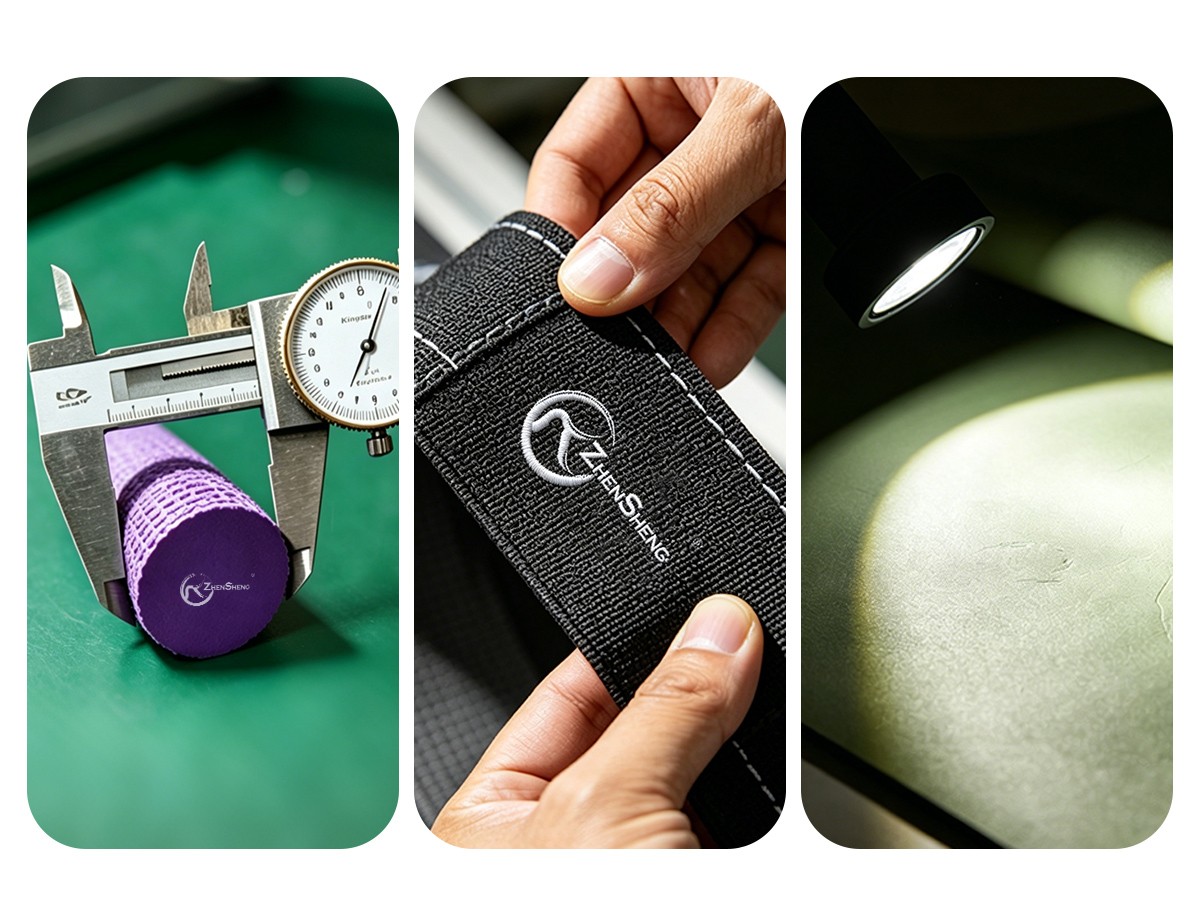
When accessories are reordered, buyers typically watch for the same common issues:
Resistance bands tearing too early or stretching unevenly
Foam rollers arriving softer, harder, or less durable than the approved sample
Balance boards feeling unstable because of tolerance or assembly differences
Logo colors, print quality, or branding changing between shipments
Odor, surface defects, or off-spec materials showing up in later lots
Packaging inconsistencies that affect retail display, labeling, or barcode scanning
Behind these concerns are five priorities: durability, safety, dimensional accuracy, visual consistency, and packaging reliability.
Quality starts before production begins. Incoming materials are checked against the approved requirements for each product type.
Typical checks include:
Supplier lot numbers and material records
Basic material properties such as elastomer grade, foam density, or board material grade
Color references, sample measurements, and material identification
By documenting these details at the start, the factory creates a record that links raw materials to finished goods.
Before mass production, a pre-production sample is made to confirm the final product standard. This sample typically includes:
Final dimensions and construction
Approved logo placement and artwork
Confirmed packaging details
A specification sheet with tolerances and test targets
Once approved, this becomes the reference sample used by quality staff during future production runs.
Rather than waiting until everything is finished, checks are built into the production flow.
Depending on the product, these controls may include:
Cure time and processing checks for resistance bands
Foam density and post-cure inspection for rollers
Fit, alignment, and assembly checks for balance boards
Print registration and logo inspection for branded items
If a problem appears, non-conforming units are separated and recorded so the issue can be traced and corrected before shipment.
At the end of production, finished goods are reviewed through sampling inspections and functional checks.
Common inspection points include:
Dimensions and tolerances
Surface appearance and visual defects
Color consistency against the approved sample
Odor and finish quality
Packaging accuracy and labeling
Functional tests may also be performed on sample units, such as tensile or elongation checks for resistance bands and compression or recovery checks for foam rollers.
Before goods leave the factory, packaging and shipment details are confirmed against the order requirements.
This step may include:
SKU and barcode verification
Carton marking checks
Inner-pack and master-carton confirmation
Palletization review
Pre-shipment inspection records
This creates a documented trail from material intake to outbound shipment, helping buyers compare one batch with the next.
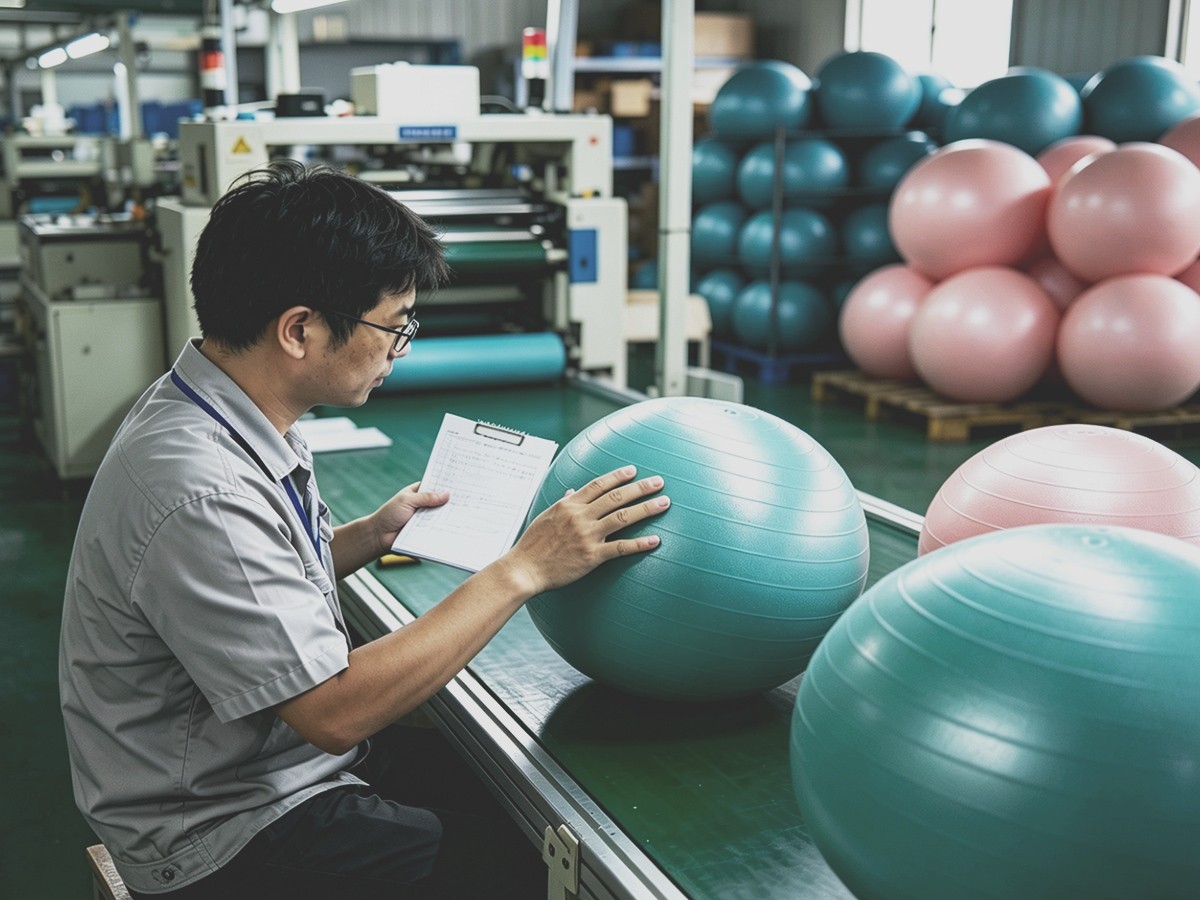
The difference between one good sample and repeatable production usually comes down to control points. ZhenSheng uses several to reduce variation across orders.
| Control Point | How it helps prevent variation | Buyer-facing evidence |
|---|---|---|
| Golden sample | Fixes the visual and dimensional target for future runs | Approved sample photos and signed specifications |
| Material specifications and supplier lots | Keeps compound grade, foam density, and other inputs consistent | Material certificates and lot records |
| Color standards | Maintains repeatable color matching for products and logos | Approved swatches or measured color references |
| Dimensional tolerances | Defines acceptable variation for critical features | Measurement sheets for each lot |
| Lot coding and traceability | Helps isolate issues to a material lot, machine run, or shift | Batch records and production timestamps |
| AQL-style sampling | Uses structured sampling to assess shipment quality | Inspection reports with sample size and defect counts |
Together, these controls help reduce drift between the original approved sample and future replenishment orders.
For fitness accessories, documentation is often just as important as the product itself. Buyers should pay close attention to the test data and quality records that support each SKU.
Relevant testing may include:
Tensile strength and elongation testing for resistance bands
Density, compression set, and recovery testing for foam rollers
Dimensional, flatness, and load-bearing checks for balance products
Slip-resistance and durability checks where applicable
Visual, odor, coating, and print-adhesion evaluations
Packaging and barcode verification for retail readiness
ZhenSheng states it works under an ISO-based quality system and maintains inspection documentation for finished products. When available, buyers should request item-specific third-party reports or certificates to support quality claims. For shipment acceptance, ANSI/ASQ Z1.4 AQL sampling remains a widely used approach for determining sample sizes and accept/reject criteria.
Customization creates opportunity, but it also introduces risk if changes are not controlled properly.
To keep custom products consistent, every approved variation should be treated as a controlled specification. That includes:
Custom colors
Private-label logos
Special packaging
Alternative materials
New print methods or finishes
Once a variation is approved, it should be added to the sample standard and product specification. From there, it follows the same process as a standard item: pre-production approval, in-process checks, final inspection, and shipment review.
This helps prevent a common problem in private-label sourcing: a perfect sample followed by inconsistent production runs.
Reliable quality control does more than reduce defects. It helps buyers:
Lower claim rates
Improve consistency across retail channels
Protect brand presentation
Reduce uncertainty on replenishment orders
Build more predictable inventory plans
For B2B buyers growing a private-label accessory line, documented incoming inspection, approved pre-production samples, in-process checks, final AQL-based inspections, and shipment records provide a stronger foundation for scaling with confidence.
Before placing repeat orders, it is worth asking for the documents that show how consistency is being maintained. Key records include:
Signed golden-sample specification sheet
Incoming material certificates
Third-party tensile or foam test reports when applicable
AQL inspection report for each shipment
Production lot and traceability records
These documents make it easier to compare batches, resolve issues faster, and keep quality aligned with the approved standard over time.
Search Blog
New Products
E-mail: info@shzhensheng.com
:
Tel.: +86 21 5204 8758
Add.: Room 203, Building 1, No. 423 Wuning Road, Putuo district, Shanghai 200063, China
Navigation
Get in touch
seoKeywords: custom size yoga mat custom logo yoga mat custom Rubber Pilates Yoga Mat eco friendly rubber yoga mat custom Pilates Yoga Mat TPE Rubber Professional Yoga Mat rectangle yoga mat tpe comfortable tpe yoga mat comfortable tpe yoga mat Customize nbr yoga mat custom round yoga mat round yoga mats wholesale eco friendly yoga mats wholesale non slip yoga mat wholesale Customize non slip yoga mat wholesale ankle weights wholesale custom round yoga mat round yoga mats wholesale personalized soccer ball size 5 personalized soccer ball size 4 Thermo Bonded Football Machine Stitched Football custom resistance bands wholesale wholesale resistance bands with logo custom printed resistance bands custom logo resistance bands custom size resistance bands custom length resistance bands custom ankle weights ankle weights cost ankle weights cost buy ankle weights custom balance board surf balance board oem yoga mat yoga mat factory yoga mat manufacturer tpe yoga mat manufacturer private label yoga mats