World Cup Football Construction: Materials & Panels (Part 1)
If you have any product customization needs or ideas, MOQ 500, contact us.
Jun. 22, 2026
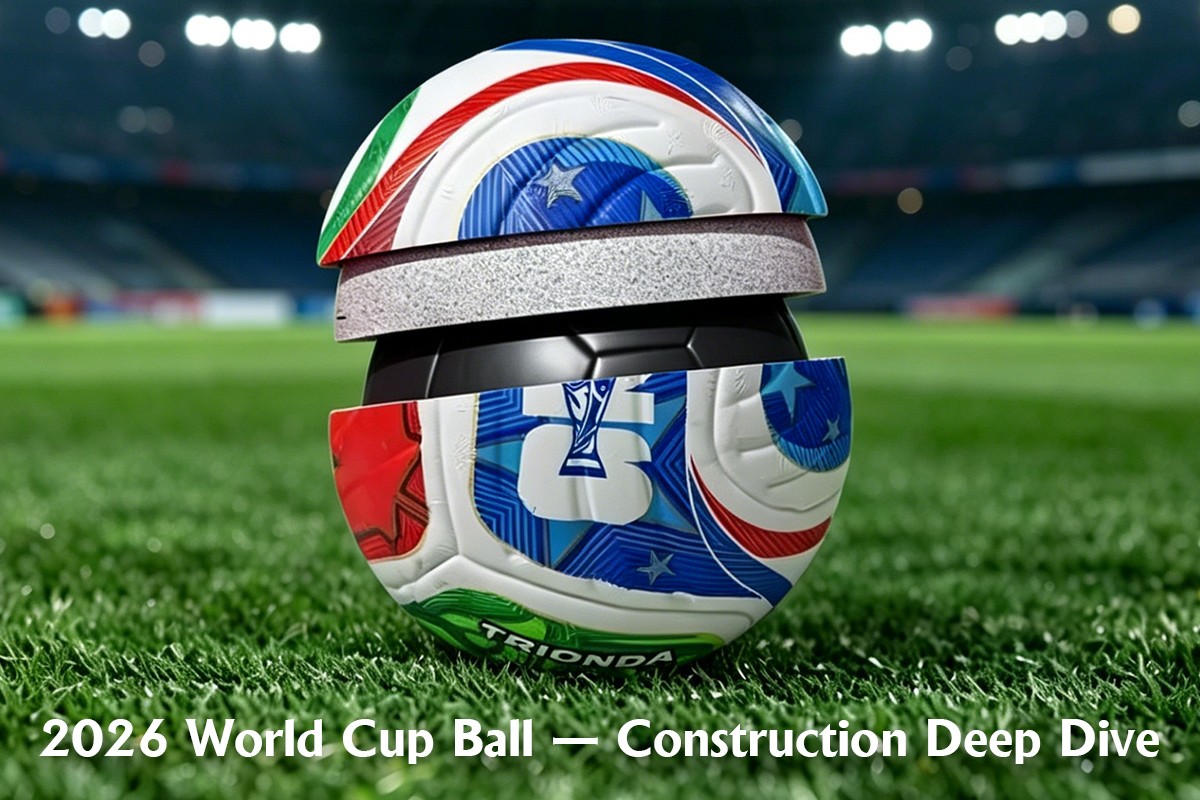
The 2026 FIFA World Cup kicks off with 48 teams, 104 matches, and a revolutionary new ball — the "Triple Wave" — built with an embedded chip, a 4-panel construction, and sustainable materials.
For OEM buyers, sports equipment distributors, and private-label brands, understanding football construction is essential to sourcing the right product for the right market. This guide breaks down the key dimensions of football manufacturing: leather materials, panel shapes, and bladder types.
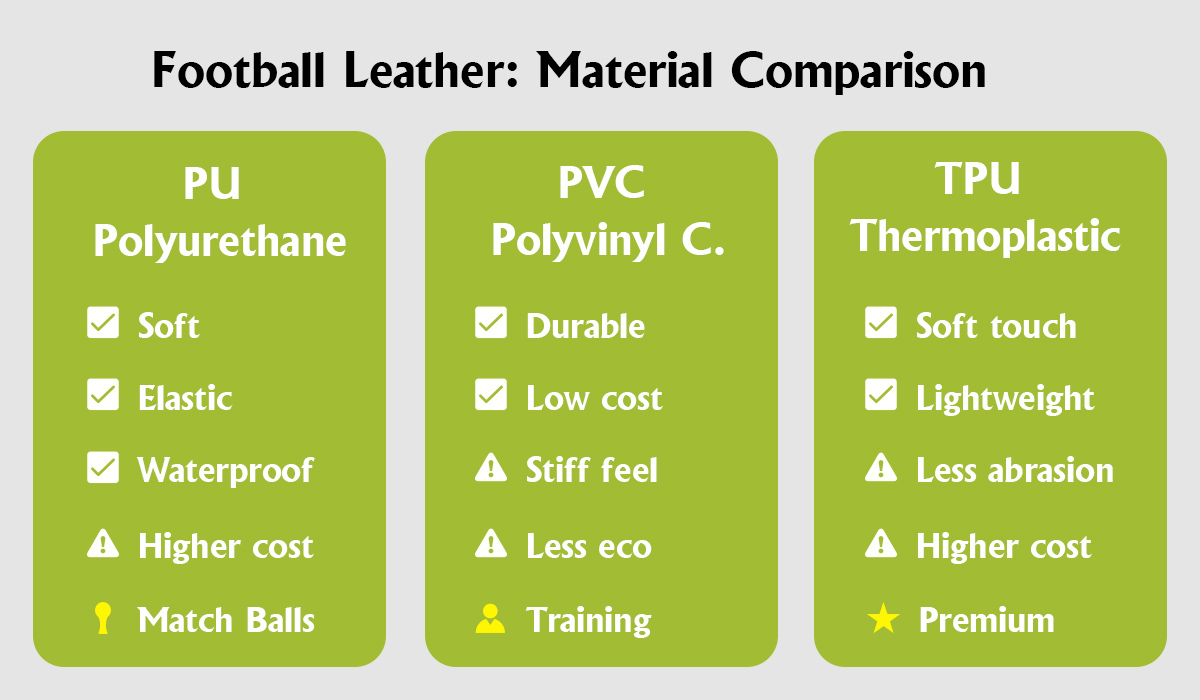
The outer layer determines durability, feel, water resistance, and cost. Most footballs today use synthetic leather, with PU and PVC being the most common options.
| Material | Key Characteristics | Pros | Cons | Best For |
|---|---|---|---|---|
| PU (Polyurethane) | Soft, elastic, eco-friendly, waterproof | Excellent feel, good elasticity, cold-resistant, water & stain resistant | Higher cost vs. PVC | Match balls, indoor, premium retail |
| PVC (Polyvinyl Chloride) | Hard, durable, less eco-friendly | Abrasion & fold resistant, low cost, good outdoor | Stiff feel, poor breathability, less eco-friendly | Training balls, outdoor, budget |
| TPU (Thermoplastic PU) | Thin skin, soft foam layer underneath | Soft feel, good touch, lightweight | Higher cost, lower abrasion resistance | Premium, players preferring soft touch |
Quick Identification: PU has a thicker backing fabric and wrinkles when pressed — PVC feels harder, stays smooth, and has thinner backing. TPU balls are noticeably softer due to the thicker foam layer beneath the thin skin.
Football construction has evolved from 18 hand-stitched leather panels in the 19th century to 32 panels on the iconic 1970 "Telstar" — and now to just 4 panels on the 2026 World Cup ball.
| Panel Type | Construction | Aerodynamics | Durability | Typical Use |
|---|---|---|---|---|
| 32-panel | Classic hexagon/pentagon pattern | Moderate, predictable flight | Good, with many seams | Training, recreational |
| 12-panel | Fewer seams, smoother surface | Better flight stability | Improved | Mid-tier match balls |
| 4-panel | Minimal seams, virtually seamless | Excellent, consistent flight | High, fewer seam failure points | 2026 World Cup, elite match balls |
2026 World Cup Innovation: The "Triple Wave" ball uses a 4-panel construction with thermal bonding instead of stitching, ensuring a completely smooth surface and unprecedented flight stability.
The bladder is the heart of the ball — it determines air retention, rebound, and feel. Two main types dominate the market.
| Bladder Type | Air Retention | Elasticity & Rebound | Durability | Typical Grade |
|---|---|---|---|---|
| Butyl (Synthetic rubber) | Excellent — holds air for weeks | Stiffer, rebounds slower, especially in cold | Good, less elastic | Training / entry-level |
| Natural Latex (Natural rubber) | Needs inflation before each use | Excellent rebound, fast shape recovery | Very durable, maintains feel | Match balls, premium |
How to Identify: Drop the ball and listen. Latex bladders produce a sharp, crisp bounce — butyl sounds duller and heavier. Always deflate premium latex-bladder balls after use to prevent bladder fatigue.
Continue reading: World Cup Football Construction: Manufacturing & Sourcing (Part 2)
Search Blog
New Products
E-mail: info@shzhensheng.com
:
Tel.: +86 21 5204 8758
Add.: Room 203, Building 1, No. 423 Wuning Road, Putuo district, Shanghai 200063, China
Navigation
Get in touch
seoKeywords: custom size yoga mat custom logo yoga mat custom Rubber Pilates Yoga Mat eco friendly rubber yoga mat custom Pilates Yoga Mat TPE Rubber Professional Yoga Mat rectangle yoga mat tpe comfortable tpe yoga mat comfortable tpe yoga mat Customize nbr yoga mat custom round yoga mat round yoga mats wholesale eco friendly yoga mats wholesale non slip yoga mat wholesale Customize non slip yoga mat wholesale ankle weights wholesale custom round yoga mat round yoga mats wholesale personalized soccer ball size 5 personalized soccer ball size 4 Thermo Bonded Football Machine Stitched Football custom resistance bands wholesale wholesale resistance bands with logo custom printed resistance bands custom logo resistance bands custom size resistance bands custom length resistance bands custom ankle weights ankle weights cost ankle weights cost buy ankle weights custom balance board surf balance board oem yoga mat yoga mat factory yoga mat manufacturer tpe yoga mat manufacturer private label yoga mats